is spray foam the only option?
For healthy home builds, it’s crucial to carefully choose materials for insulation and weatherization. Flat-roof homes are becoming more popular along the coast for their modern aesthetic appeal and low profile for premium expansive ocean views. These homes typically use TPO or PVC roofing, paired with spray foam insulation on the interior. However, many spray foam products release chemicals like formaldehyde, SVOCs, and flame retardants into the living space, which can be harmful to indoor air quality.
Finding a healthier alternative while maintaining the high R-value of 38 required by Title 24 and keeping the project within budget was the objective for this healthy home build:
“Spray foam is commonly used in residential flat roofs because it’s affordable, easy to install, and effective. When installed correctly, it provides decades of service and fully encapsulates the space, preventing moisture and mold from condensation. However, for our client whose health is compromised by toxic chemicals used in conventional building materials, we needed a different solution. We found that with Johns Manville Polyiso Boards and Blow-in-Blanket System.”
Option 1: Exterior insulation, also known as a “warm roof,” is a common application for commercial flat roofs and for residential flat roofs in other countries. Several layers of polyiso boards would have been needed to meet R-value code requirements for a residential home plus additional height to slope the flat roof. In hindsight, this would have been the fastest and best solution. (Note: Exterior spray foam was not an option due to the coastal breeze. Not all of the spray foam would land on the roof during application which ruled it out as an option for this home.)
Option 2: Insulating both the interior and exterior, known as a “hybrid roof,” is the next most common approach for residential flat roofs after spray foam. However, experts in this area have found that this option has resulted in moisture and mold issues due to temperature differentials between the exterior and interior of the home. This option was immediately ruled out.
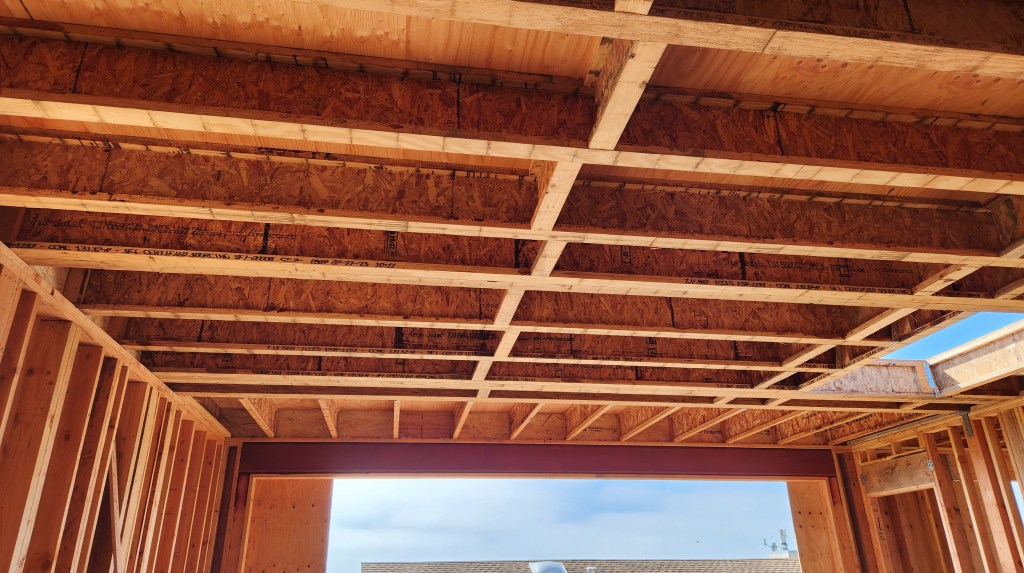
Option 3: Interior insulation only, known as a “cold roof” is often achieved with spray foam. Fiberglass or mineral wool batts are typically used in pitched roofs, however, they require proper ventilation which is not possible with limited space for venting and airflow obstructions in flat-roof designs (as seen in the photo above with areas where joists change direction and terminate at skylights). As an alternative, the following solution was designed with guidance from an Environmental Architect, Johns Manville’s Building Scientist Francis (JR) Babineau, and a local insulation company:
- Johns Manville Polyiso Foam Boards: These 1.5″ boards (R-9 value) will be cut to fit snugly in the ceiling and rim joists. The key is meticulously sealing the joints with caulk or flexible sealant to handle minor expansion and contraction. This air-sealing step will prevent condensation and air leakage, which are primary causes of moisture problems. The low vapor permeability of polyiso also acts as a moisture barrier while reducing thermal bridging.
- Johns Manville Blow-in-Blanket System® (BIBS) BIBS will be installed below the sealed boards to meet the rest of the required R-38 value. BIBS is free from formaldehyde, binders, and inks, making it a healthier option for the client. It is also fire-resistant without the use of flame retardants and is inorganic, so it will not support mold growth.
- Chemlink M1 will be used to seal exterior joints for added air-sealing protection or to the interior joints above the boards and used to adhere the boards and seal the permiters. “M-1 is a moisture cure, multi-purpose structural adhesive/sealant designed for bonding and sealing a wide range of construction materials. M-1 forms a tough, elastic & waterproof seal to most roofing materials, masonry, wood, glass, aluminum and foam. M-1 bonds well to most building surfaces including metal flashing, copings, skylights, and HVAC surfaces and makes for an excellent construction adhesive sealant for multiple applications.”
Detailed planning for framing, mechanicals, and insulation and an insulation crew skilled at cutting polyiso and caulking are imperative for this option to be successfully implemented.
 Healthy Home Build